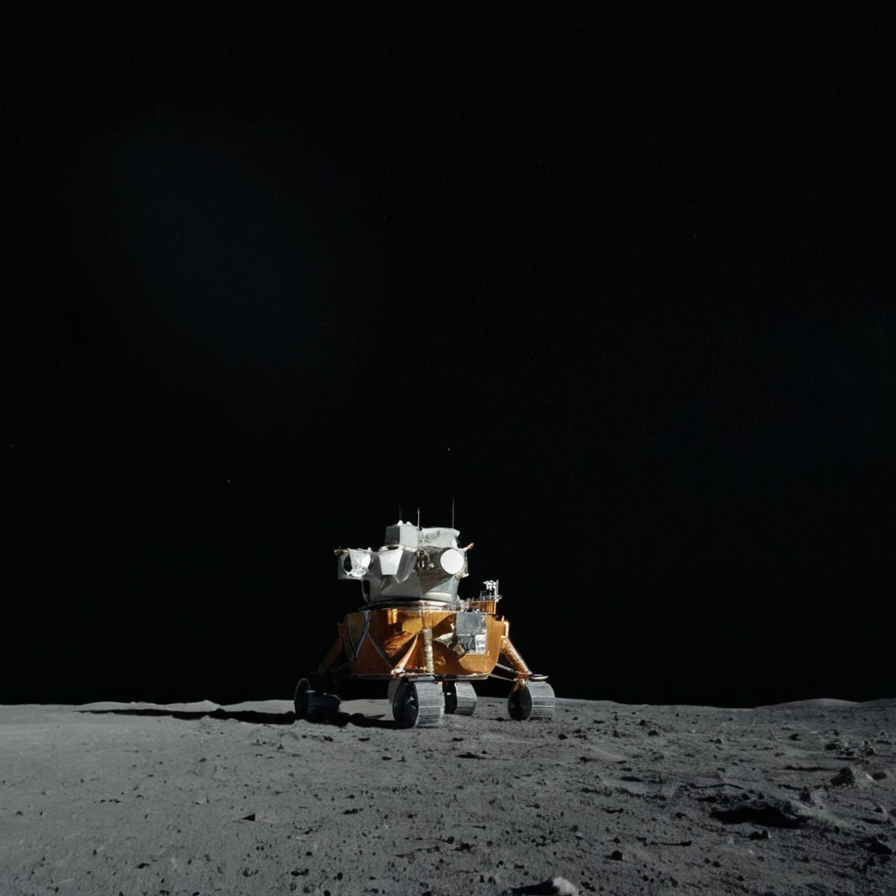
As the world prepares for a new era of lunar exploration—NASA’s Artemis program, private landers, international partnerships—there’s one mission-critical factor few are talking about: space weather on the Moon.
No atmosphere. No magnetic field. No protection.
That’s the Moon. It makes for beautiful photos and brutal physics.
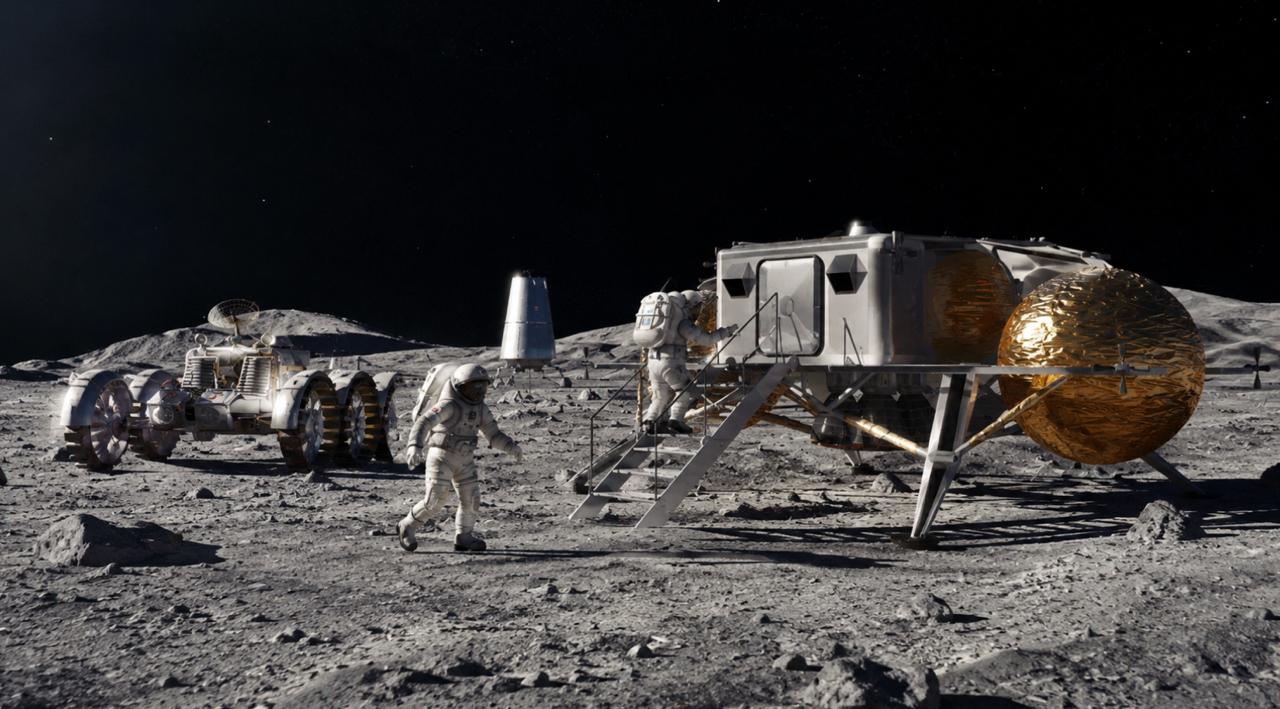
Unlike Earth, the lunar surface is exposed to intense solar radiation, high-energy particles, and plasma streams. Solar storms can trigger extreme surface charging, damage electronics, and put human lives at risk. And with extended human presence on the Moon becoming real—not sci-fi—understanding this invisible threat is no longer optional.
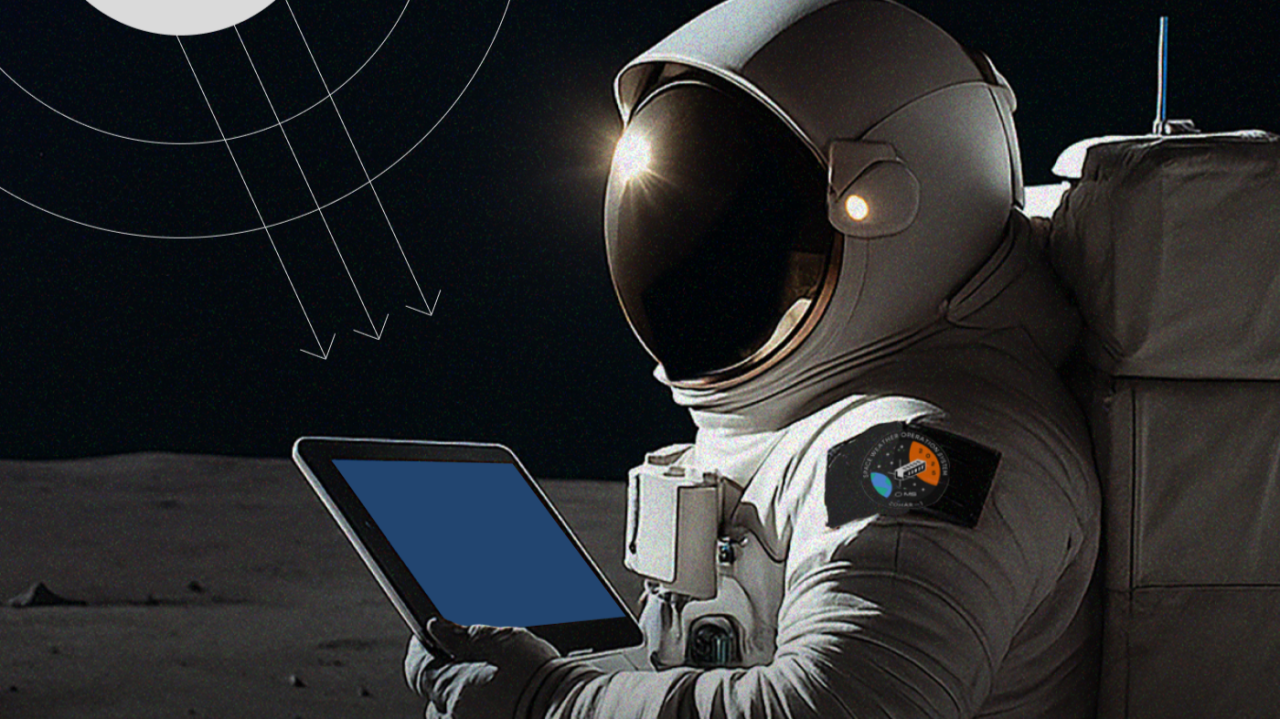
At Mission Space, we’re building the first lunar space weather system designed specifically for surface operations.
This isn’t just a repackaged Earth model. It’s a dedicated monitoring and forecasting capability that takes into account:
• Solar particle flux during storm events
• Surface charging risks on regolith and hardware
• Radiation dosage across day/night cycles
• Plasma interactions with equipment and structures
We’re adapting our proprietary real-time forecasting engine—already outperforming current for lunar needs. That includes new payloads and a surface charge monitor engineered for lunar conditions.
Set for 2026, iSpace’s APEX 1.0 mission will land at the Schrödinger Basin on the far side of the Moon. It’s not just a lander—it’s a delivery platform for both NASA Artemis payloads and commercial tech. Designed to carry instruments for science, comms, and surface operations, APEX 1.0 supports the kind of infrastructure lunar permanence depends on. It also includes a relay satellite capability, solving one of the biggest challenges of far-side missions: communication. iSpace’s vision is clear—build the backbone for a sustainable lunar economy.
Intuitive Machines is lining up Moon landings like clockwork. IM-1 and IM-2 have already launched, and IM-3 is expected in late 2025. Each mission uses the Nova-C lander as part of NASA’s CLPS initiative, and the payloads are diverse: 4G/LTE demos with Nokia, science experiments, rovers, hoppers, and resource prospecting tech. These landers aren’t one-off science labs—they’re multipurpose delivery vehicles building out lunar capability, one mission at a time.
Voyager Space, in partnership with Airbus, is building Starlab—a commercial space station for low Earth orbit launching in 2028. But the roadmap doesn’t stop there. Voyager is already laying the groundwork to bring that modular tech to the Moon. The long game? A permanent presence built on infrastructure that can grow, adapt, and support crewed missions. Their collaborations—including hospitality design input from Hilton—hint at how fast lunar missions are moving from experimental to operational.
All of these missions have one thing in common: exposure to lunar space weather.
Without forecasting, every system and timeline becomes a gamble.
Because future lunar operations—whether it’s power generation, comms, habitats, or mining—need resilience. A solar storm at the wrong time can mean lost data, fried circuits, or radiation overexposure. The cost? Mission delays, equipment loss, or worse.
By providing space weather data tailored for the Moon, Mission Space gives lunar missions a decision-making edge—when to shut down systems, reroute tasks, or trigger safe mode.
Lunar space weather is the missing link in infrastructure planning.
We’re making it visible, predictable, and actionable.
We’re already working with teams planning future lunar activity.
If you’re building for the Moon, we should talk.