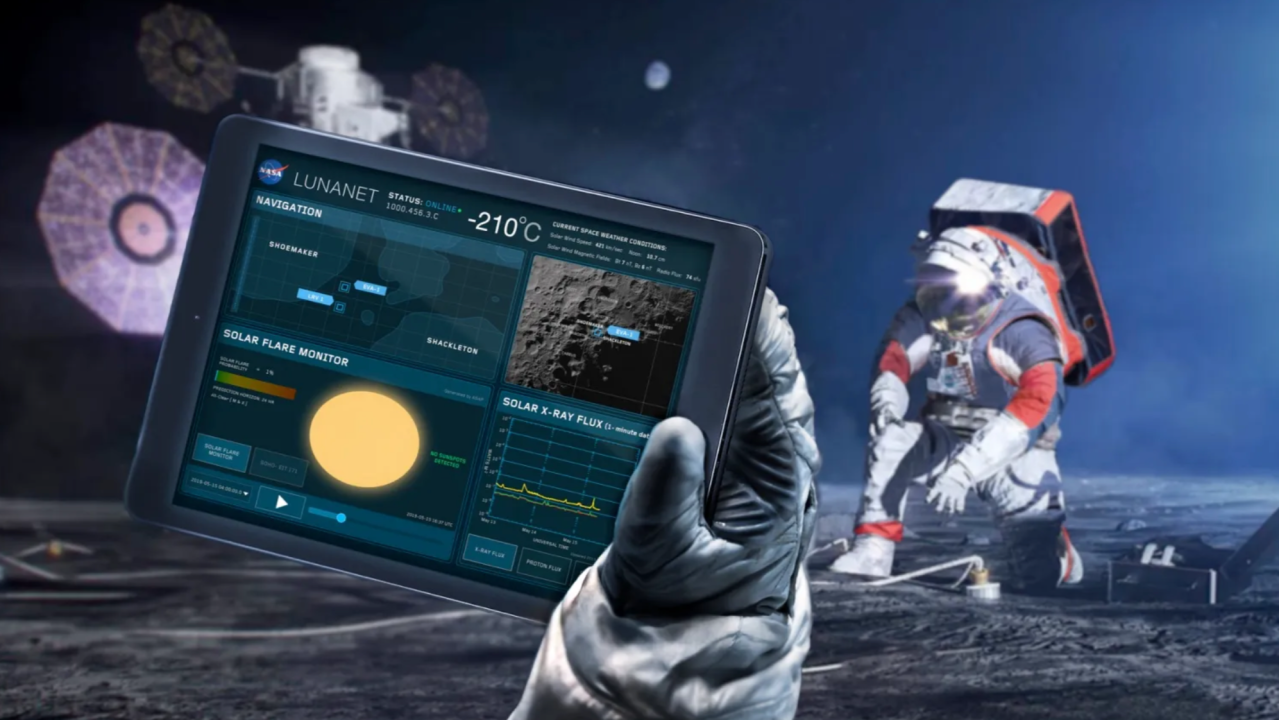
For most of the last decade, U.S. space weather policy has moved from define the national problem, assign responsibilities, and create benchmarks to improve the research-to-operations pipeline, and push agencies toward implementation. That sequence shows what the federal government actually wants from the space weather sector: sustained observations, usable benchmarks, operational forecasting, sector-specific decision tools, and response procedures that work across civilian, defense, and commercial systems.
The first major White House-level document was the National Space Weather Strategy in 2015. It framed space weather as a national preparedness issue affecting critical infrastructure, satellite operations, communications, transportation, navigation, and national security. It set six strategic goals: benchmarks for severe events, response and recovery, protection and mitigation, infrastructure impact assessment, better forecasting, and international cooperation. At that stage, the federal government was building the policy architecture. It was defining the risk and the agencies that would have to deal with it.
Later in 2015, the National Space Weather Action Plan turned that strategy into an execution document. Agencies were assigned deliverables, timelines, and coordination requirements. Among the most important actions was the requirement to develop Phase 1 benchmarks for different space weather hazards, including ionizing radiation, induced geoelectric fields, ionospheric disturbances, solar radio bursts, and upper atmospheric expansion. For ionizing radiation, NASA and the Department of Commerce, with NSF, DOT, DOW, and FCC, were tasked to assess feasibility and use the existing literature and models to produce benchmarks.
In 2016, Executive Order 13744 formalized the governance layer. OSTP was assigned the federal coordination role. The order directed the creation of the Space Weather Operations, Research, and Mitigation Subcommittee, or SWORM, under the National Science and Technology Council. It also assigned clear agency roles: NOAA for civilian forecasts and warnings, DOW for military support, DHS for preparedness and recovery coordination, NASA and NSF for research, DOE for grid emergency responsibilities, DOI for geophysical and geomagnetic support, and State for international coordination. That division of labor still shapes the federal structure today.
The first benchmark package arrived in 2018 with the Space Weather Phase 1 Benchmarks Report. This report covered five hazard areas and, for ionizing radiation, separated the problem into three physically distinct categories: solar energetic particles, galactic cosmic rays, and radiation belt particles. Benchmark work determines what gets engineered, tested, insured, and planned for. Federal policy had moved to assigning event classes and measurable parameters that could support technical planning.
In 2019, the federal government published Next Step Space Weather Benchmarks, which reviewed the first benchmark effort and identified where more work was still needed. The document said clearly that the 2018 benchmarks were a first pass and that important gaps remained, including event characterization, energy and species coverage, model maturity, and alignment between benchmark design and user needs. That is a recurring theme across the U.S. policy record: the government has had benchmark work underway for years, but translating space weather physics into operator-relevant thresholds has taken longer than the initial plans implied.
Also in 2019, the White House updated the policy stack with the National Space Weather Strategy and Action Plan. The structure was simplified into three main objectives: protect national security, homeland security, and commercial assets and operations; improve space weather characterization and forecasts; and establish response and recovery procedures. This version was more operational than the 2015 strategy. It also spoke more directly to commercial space, including commercial assets, uncrewed and crewed exploration, and the role of space weather in supporting U.S. commercial growth.
The next important step came in 2022 with the Space Weather Research-to-Operations and Operations-to-Research Framework. This document addressed a specific institutional weakness: the gap between research output and operational use. The federal system already had a strong scientific base. It still needed a more formal pathway to transition models, data products, and forecasting methods into operations, while also feeding operational needs back into research. NOAA, NASA, NSF, DOD, and other agencies were brought into a structured framework around proving grounds, validation, and coordinated transition mechanisms. This is one of the clearest federal acknowledgments that better science alone does not automatically produce better operational forecasting.
By 2023, the White House had moved into implementation management. The Implementation Status White Paper reviewed progress through December 2022. Its most important message was: current forecasting capability still did not give senior government leaders and many private-sector operators enough information to take preemptive action. That sentence defines the remaining gap. The system had strategy, governance, benchmark work, and interagency structures. It still needed decision-grade forecasting products.
The 2023 Implementation Plan then laid out the next five years of federal work. It called for updating the Phase 1 benchmarks, identifying remaining benchmark gaps, and producing additional rigorous benchmark products. It called for sustaining and defining the national observing architecture across space-, ground-, sea-, and air-based systems. It highlighted continuity needs at L1, ongoing solar radio and geomagnetic monitoring, GNSS observations, better hazard maps, improved impact modeling, updated response concepts, stronger interagency agreements, leadership decision aids, and a satellite anomaly attribution information system. By that point, the federal requirement set had become much more specific. The government was asking for persistent data, validated operational transition, impact-linked products, and decision support tools.
Then the public White House document stream largely stopped. The strongest public signal after 2023 came from the 2024 SWAG national survey of user needs for space weather. That report collected input across multiple sectors and produced 46 findings and 113 recommendations. The user community asked for more regional and local products, longer lead times tied to actual impacts, lower latency, better uncertainty information, more machine-readable and interoperable data, more exercises and training, and stronger support for automation. This is a significant development in the federal record because it shifts the emphasis from generic preparedness into operational user requirements. Users were asking for products that help them decide, not just products that describe solar and geospace conditions.
NOAA also moved the observing architecture forward. In 2024, NOAA’s readiness report for the Space Weather Next L1 Series stated that the program was ready to begin development. NOAA described Space Weather Next as the path for operational data continuity and enhanced capability through a portfolio of missions. That matters because continuity in the observation architecture has been a recurring concern across federal documents for years. The policy logic is simple: operational forecasting depends on sustained measurements. Forecast quality degrades when the observing backbone ages out or gaps appear.
Commercial data also moved deeper into the federal picture. NOAA’s Space Weather Data Pilot evaluated commercial ionospheric observations from PlanetiQ and Spire using radio occultation measurements from GNSS receivers on LEO satellites. The pilot reflects a broader development in federal space weather policy: the U.S. is testing whether commercial data can meet operational standards for quality, latency, validation, and archival use.
Preparedness also became more operational. NOAA released the public After Action Report for the 2024 national space weather simulation exercise in 2025. That exercise occurred on May 8–9, 2024. The real G5 geomagnetic storm followed immediately on May 10–11, 2024. A national exercise followed almost immediately by a real severe event. From a policy perspective, this was an important test of whether years of plans, coordination language, and operating concepts were translating into real institutional readiness.
By 2026, NOAA had also published a cost-benefit analysis for Space Weather Next, estimating large long-term economic benefits for electric power, aviation, and satellite operations relative to a no-capability baseline. That is another sign of maturation. Earlier documents focused on hazard description and policy structure. Newer documents are trying to quantify the value of operational space weather capability in economic terms, which is what budget, procurement, and programmatic decisions require.
First, the demand signal is clear. The government wants more than general awareness of space weather. It wants persistent observations, reliable continuity, validated transition from research into operations, sector-specific products, anomaly attribution, and forecasts that support preemptive decisions. Those requirements are visible across the White House strategy stack, the SWAG user-needs record, NOAA architecture planning, and recent readiness exercises.
Second, the benchmark problem is still not fully closed. The United States has benchmark documents, and they are useful. The federal system has also spent years revising, refining, and expanding them. That tells you two things at once: the government understands the importance of benchmarks, and the benchmark framework still needs more work to match real operator use cases. Benchmark development for ionizing radiation, geoelectric effects, radio bursts, upper atmospheric expansion, and ionospheric disturbances has moved forward. The remaining challenge is linking those hazard descriptions to actual engineering thresholds, mission planning decisions, and operational triggers.
Third, the biggest gap in the public federal record remains decision usefulness. The federal government has said directly that many forecasts still do not provide enough lead time and fidelity for leaders and operators to act early. That is where the next generation of space weather capability needs to improve: more localized measurements, better environmental specification, better data latency, stronger model validation, and outputs tied to real operational thresholds.
This is where the commercial sector becomes strategically important. Federal policy has already opened the door for private data and private operational capabilities. The remaining question is execution quality: can commercial systems deliver the measurements, validation, cadence, integration, and mission relevance that federal and commercial users need?
Mission Space is building in exactly that gap. The public policy record shows a federal system asking for better operational data, better transition into operations, and better decision support for real systems in orbit and on Earth. The need is already defined. The benchmark work exists. The user-needs signal is public. The observing architecture is being rebuilt. The remaining work is to deliver measurements and products that operators can actually use when conditions change.