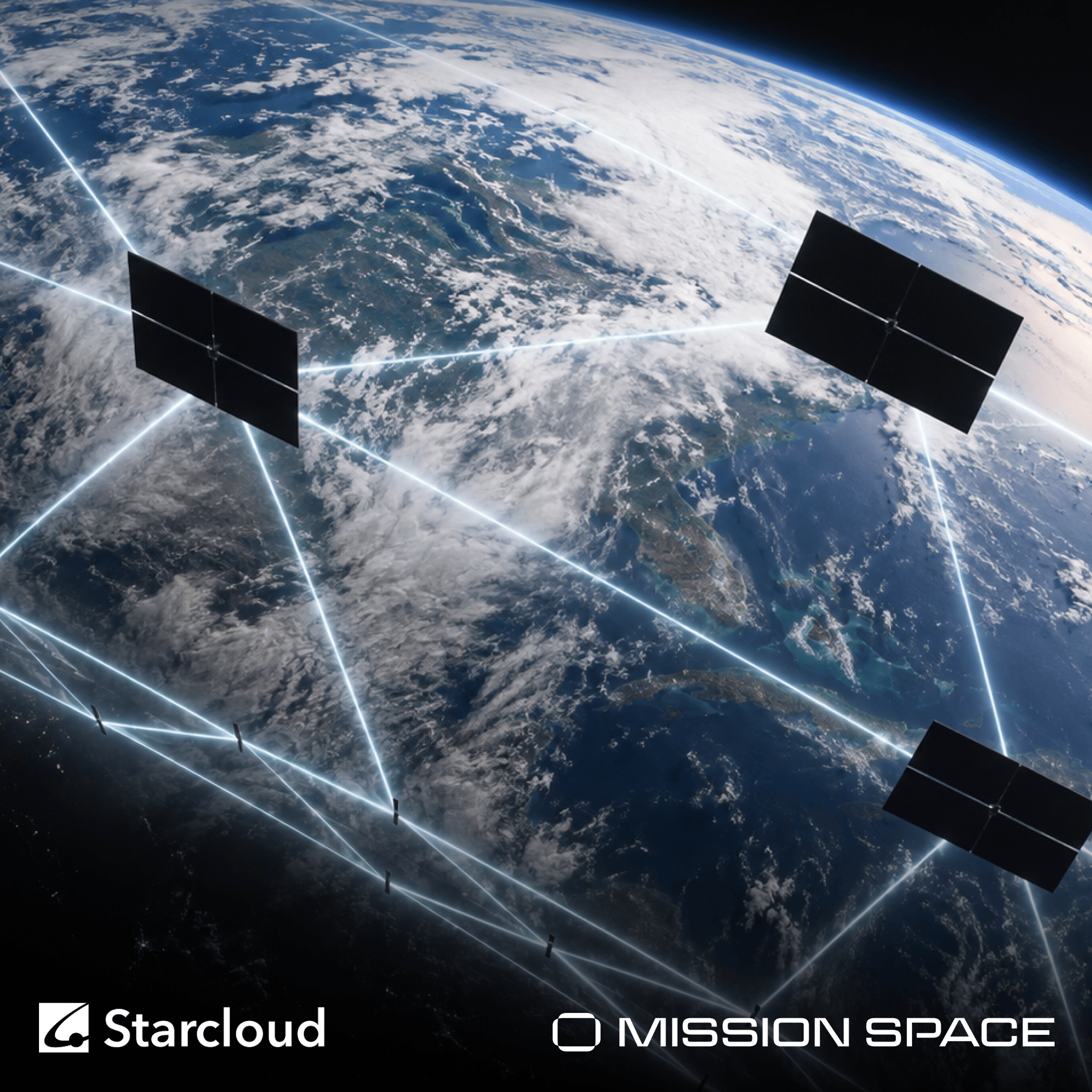
As the demand for global connectivity, lower latency, and sovereign control over data grows, the concept of orbital data centers is gaining traction among aerospace, telecom, and hyperscale computing leaders.
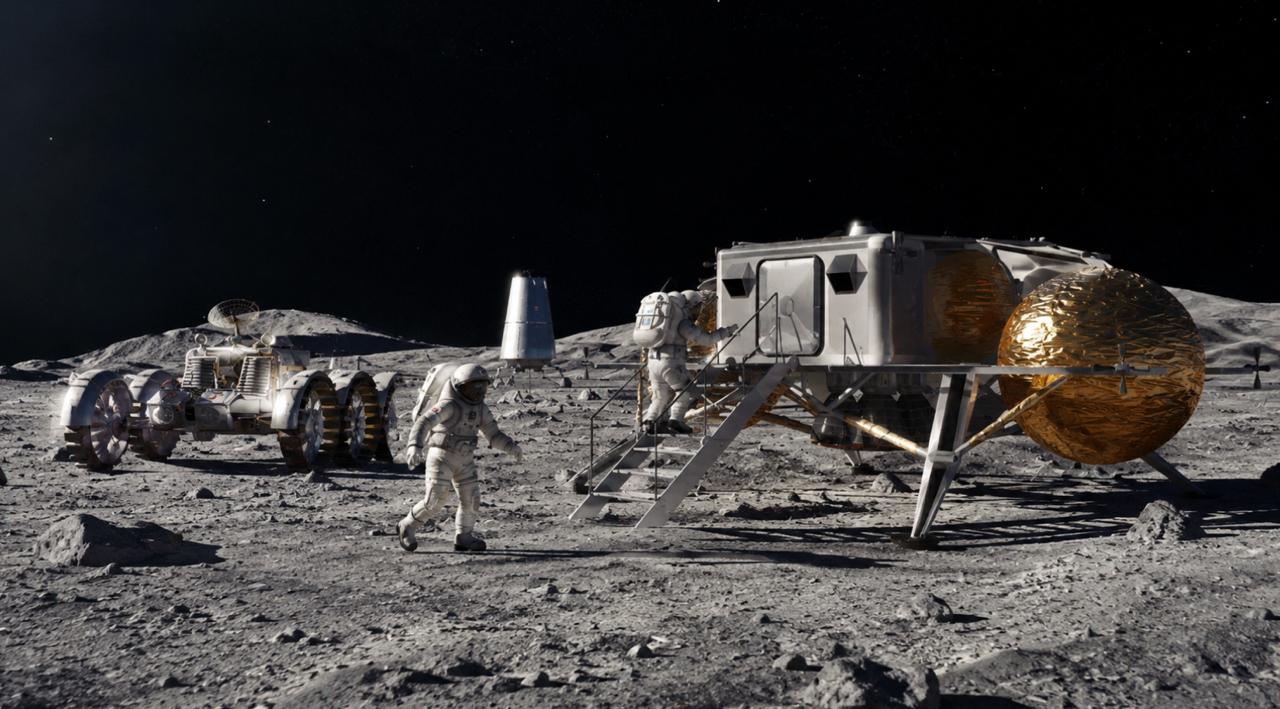
Concepts from companies like Microsoft’s Project Natick (originally an underwater data center initiative), Thales Alenia Space, AWS, Axiom, Starcloud, and even Lonestar—now planning lunar edge servers — suggest a strategic pivot: compute infrastructure is moving beyond Earth.
LEO-based data centers offer significant advantages: global line-of-sight coverage, physical insulation from terrestrial threats (natural disasters, geopolitical instability), and potential energy efficiencies through passive cooling. But they also introduce a new class of risk: constant, unshielded exposure to radiation.
Space radiation includes solar energetic particles (SEPs), galactic cosmic rays (GCRs), and the trapped particles within the Van Allen belts.
• Protons:
Trapped in Earth's Van Allen belts, especially concentrated in the South Atlantic Anomaly (SAA). At 500 km altitude, proton fluxes range from 100 keV to 400 MeV, with annual fluences up to 721 × 10⁶ cm⁻² in ISS-like orbits.
• Electrons:
Present in the outer Van Allen belt and as secondary particles from proton interactions. Energies range from 40 keV to 7 MeV, with fluxes exceeding 10⁷ cm⁻² s⁻¹ in high-radiation zones.
• Gamma rays:
Primarily secondary radiation generated when high-energy particles interact with spacecraft materials like aluminum shielding.
• Memory corruption:
Single Event Upsets (SEUs) flip memory bits at rates up to 1.3 events/day in LEO satellites, escalating in higher orbits.
• Component degradation:
Radiation-hardened NAND flash and SSDs still require error correction (EDAC) systems to survive.
• Heat management challenges:
Radiation-induced energy deposition complicates thermal control in vacuum conditions.
Unlike Earth-based infrastructure, where atmospheric protection and magnetic shielding reduce high-energy particle interference to negligible levels, orbital data centers will operate in regions where radiation is a permanent factor.
• In 2003, a major solar storm disabled the Japanese ADEOS-II satellite.
• In 2012, Intelsat’s Galaxy 15 experienced a loss of control attributed to electrostatic discharge.
• In 2022, a minor geomagnetic storm triggered atmospheric drag that led to the deorbiting of 40 SpaceX Starlink satellites.
Each event showcases a different mechanism — latch-ups, surface charging, drag — but the root cause is the same: space weather.
Orbital data centers will carry denser compute loads and more sensitive storage than traditional satellites. When running AI training, encryption, or latency-sensitive workloads, a single SEU (Single Event Upset) could corrupt core models or affect live customer transactions.
Silent data corruption is a particularly insidious threat. A bit flip in an AI model’s weight table or memory cache may not crash the system — it may just produce incorrect output.
Radiation-hardened components, such as ECC memory and triple-modular redundancy (TMR) logic, are often cited as protective measures. But the tradeoff is steep: lower performance, greater power consumption, and poor scalability.
Data centers operating at exascale levels — or even a fraction of it — will struggle to meet commercial requirements using legacy aerospace hardware.
Furthermore, cosmic rays don’t just impact logic; they age materials, degrade solar panels, and compromise heat dissipation layers.
Passive shielding adds mass, not intelligence. Without real-time environmental data, it’s like driving blindfolded in a thunderstorm wearing a raincoat. It helps —but it doesn’t solve the problem.
Terrestrial data centers rely on ambient sensors, weather APIs, and predictive analytics to manage everything from cooling to traffic distribution. In orbit, that situational awareness doesn’t yet exist. Current space weather forecasting models are Earth-based and rely on sparse satellite data, often hours delayed and lacking spatial granularity.
Consider NOAA’s DSCOVR or ESA’s Solar Orbiter — valuable, but not optimized for commercial LEO operations. Their orbits are distant, data latency is high, and they weren’t designed for real-time protective use cases.
What’s needed is a layer of onboard autonomy — not just prediction, but direct detection
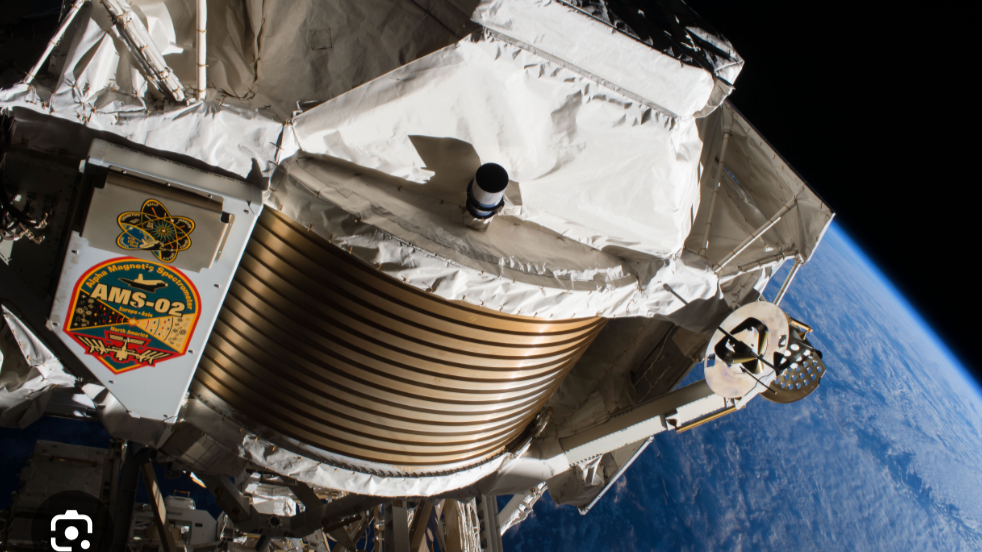
Mission Space’s ZOHAR payload is an example of what that future could look like. ZOHAR is a compact radiation detection system already operating in orbit. It measures particle flux in real time — specifically protons, electrons, and heavy ions — across energy bands relevant to electronic failures.
ZOHAR can provide a template: real-time monitoring embedded near compute hardware to detect radiation spikes, recognize patterns indicating a solar event, and initiate local protective action. That could mean shutting down volatile memory, pausing sensitive workloads, or isolating fault-prone circuits until radiation levels subside.
This kind of responsiveness cannot be outsourced to Earth. By the time ground stations detect an anomaly and send commands, damage could already be done.
The shift from passive resilience to active mitigation is underway. The concept is familiar to aerospace engineers — many spacecraft already use onboard monitors to enter “safe mode” during solar storms.
But orbital data centers will operate at a completely different scale, with commercial-grade expectations for uptime and SLA compliance.
That demands:
• Onboard radiation sensing
• Real-time alerting and logging
• Workload orchestration linked to radiation thresholds
• Cross-satellite coordination in constellations to shift load away from exposed nodes
This isn’t science fiction — it’s architectural planning. Edge computing strategies already prioritize redundancy, load shedding, and smart routing. Now, those strategies must become radiation-aware.
Environmental monitoring is not an add-on. Just as Earth - based systems rely on electricity, cooling, and connectivity, orbital systems will rely on space weather forecasting.
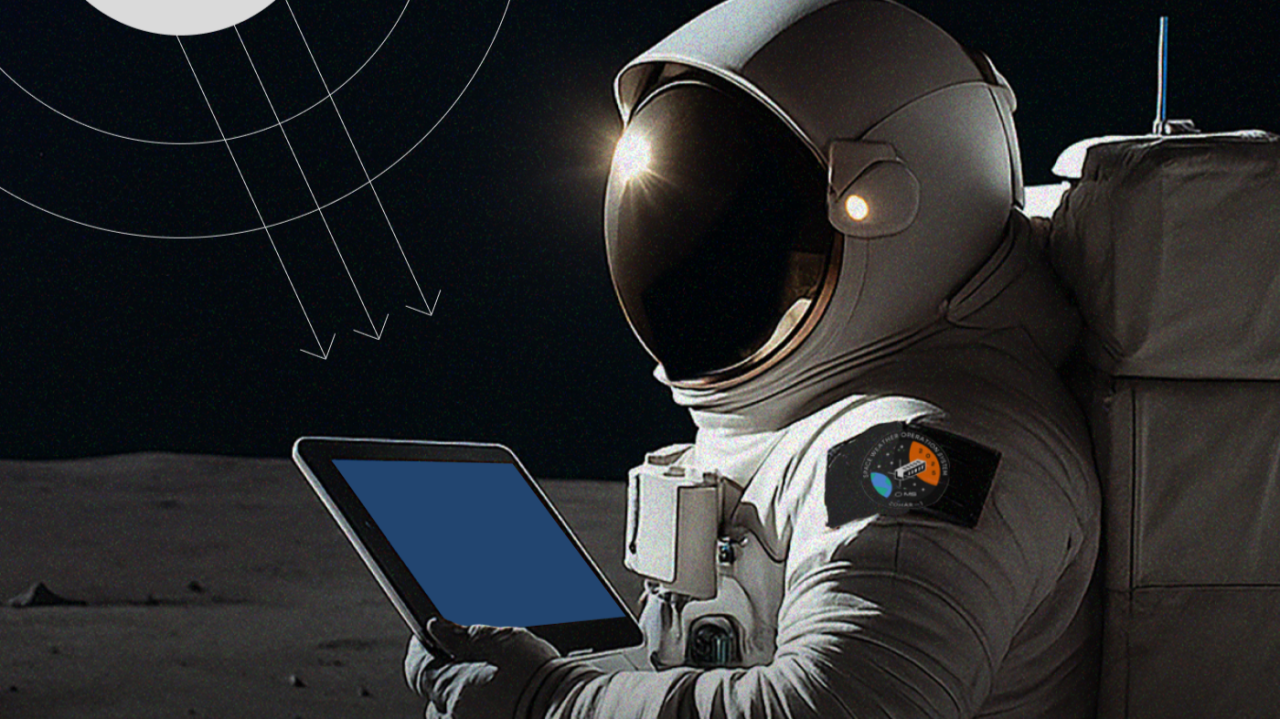
ZOHAR-like sensors could act as a distributed, in-situ mesh of data points feeding into radiation-aware workload orchestration engines. Combined with Mission Space’s proprietary forecasting engine this enables both local defense and global prediction.
Imagine orbital Kubernetes, but with a new metric in the scheduler: radiation exposure score. Tasks could migrate away from nodes at risk, or duplicate to hardened environments preemptively. Just - in - time data replication and prioritized cache flushing based on flux alerts could become standard features.
Integrating Mission Space's Zohar radiation sensors into orbital data centers (DCOs) could significantly enhance autonomous operation by enabling real-time radiation monitoring and adaptive mitigation. Here's how this integration could work:
Radiation Sensing Capabilities
• Multi-spectrum detection: Zohar sensors measure protons (1 keV–400 MeV), electrons (40 keV–7 MeV), and secondary gamma rays simultaneously.
• High-resolution data: With 1,000 measurements/sec and 15 scientific parameters tracked, DCOs gain granular radiation environment insights.
• AI-enhanced forecasting: Mission Space's models predict solar particle events 96 hours in advance with 230% improved accuracy vs conventional systems.
The orbital cloud is coming. But if data centers are to survive in space, they must be more than hardened — they must be situationally aware.
Radiation is not a one-time event; it’s a continuous risk that ebbs and spikes with the Sun’s unpredictable temperament. And with the solar maximum approaching in 2025, the cost of ignoring this invisible threat is rising.
Mission Space is building the tools to make orbital infrastructure self-aware and self-defending. ZOHAR is one example of what’s possible. Future orbital data centers should treat it not as a backup plan — but as a foundation.
Uptime in orbit won’t just be about hardware. It will be about knowing what’s coming, and acting before it arrives.