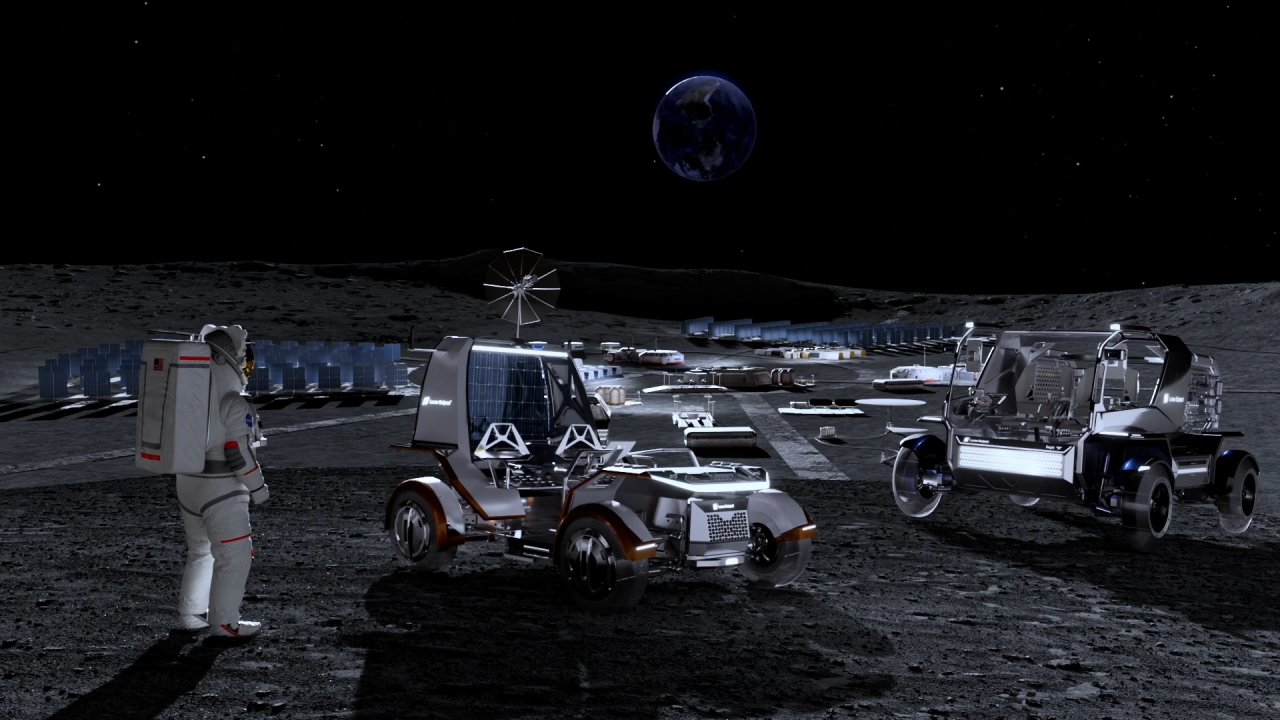
NASA’s latest rover and lander updates show where the lunar surface program is going: heavier mobility, longer operations, more commercial delivery, and repeated access to the South Pole.
In May 2026, NASA awarded Astrolab $219 million and Lunar Outpost $220 million for the first phase of Lunar Terrain Vehicle work, with the goal of deploying crewed and uncrewed mobility systems to the Moon by 2028 through CLPS.
This changes the instrument requirements. A rover that drives a few meters for a short science demo can survive with conservative margins. A rover that carries payloads, supports Artemis operations, operates between crewed visits, or works near permanently shadowed regions needs local environmental sensing as part of the vehicle architecture.
The Moon does not have weather in the terrestrial sense. It has radiation, plasma, electrostatic charging, abrasive dust, thermal extremes, and human-made disturbance from landers, wheels, drills, exhaust, payload deployment, and repeated operations. This might sound surreal. But this is real environment for next gen rovers.
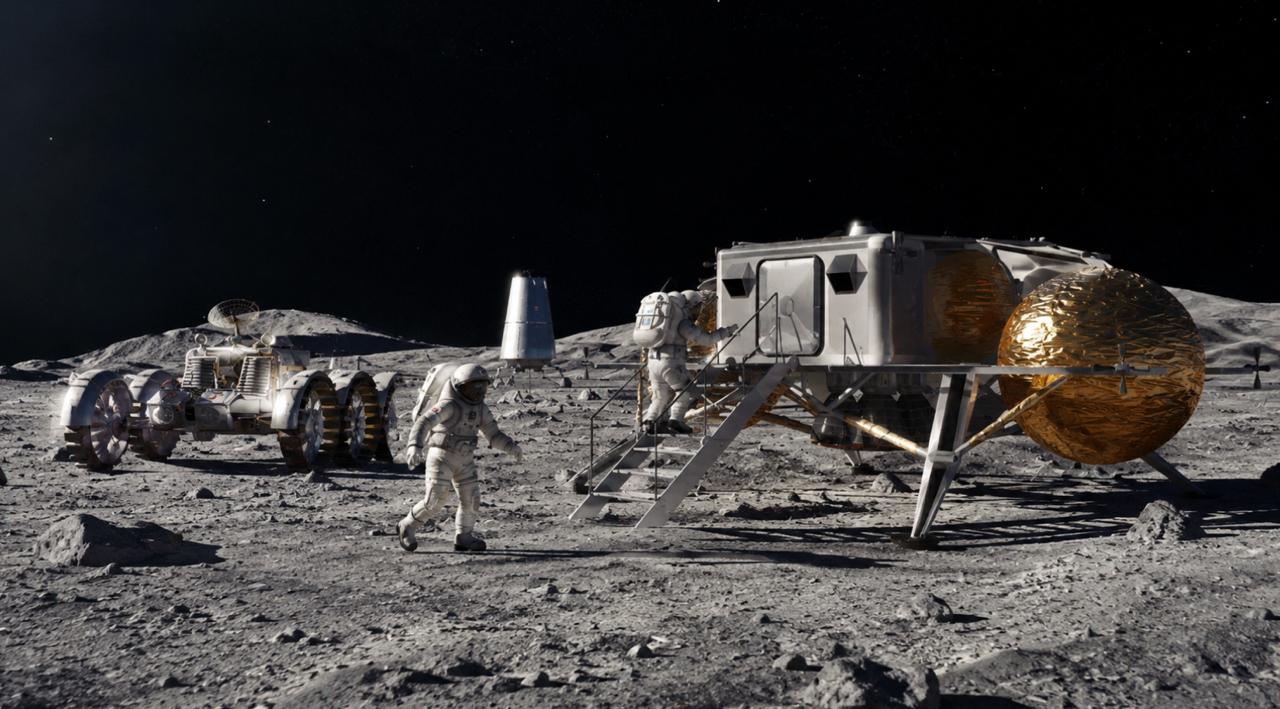
The Lunar Terrain Vehicle program is moving toward service-based mobility. Astrolab’s FLEX concept is built around robotic payload transport, teleoperation from Earth or lunar orbit, crew interfaces, suspension, and deployment of larger payloads. Lunar Outpost’s Eagle LTV is positioned as a crewed and cargo transport system for Artemis surface operations.
At the same time, smaller robotic mobility is still active. Astrobotic (acquired by Voyager) lists Griffin Mission One for the Nobile region in 2026, with payloads from Venturi Astrolab, ESA, NASA, and Astrobotic. Firefly’s Blue Ghost Mission 2 is planned for the lunar far side with a dual lander-orbiter configuration, LuSEE-Night on the surface, and Lunar Pathfinder deployed in lunar orbit for communications support. Intuitive Machines has already flown surface systems including Micro Nova Hopper, designed to survey terrain under its flight path.
VIPER’s cancellation also matters here. NASA ended the rover project in 2024 and said it would pursue alternative methods to accomplish many of VIPER’s goals, including verifying ice at the lunar South Pole. That pushes more pressure onto distributed missions: landers, smaller rovers, hoppers, commercial mobility platforms, and local instrument packages.
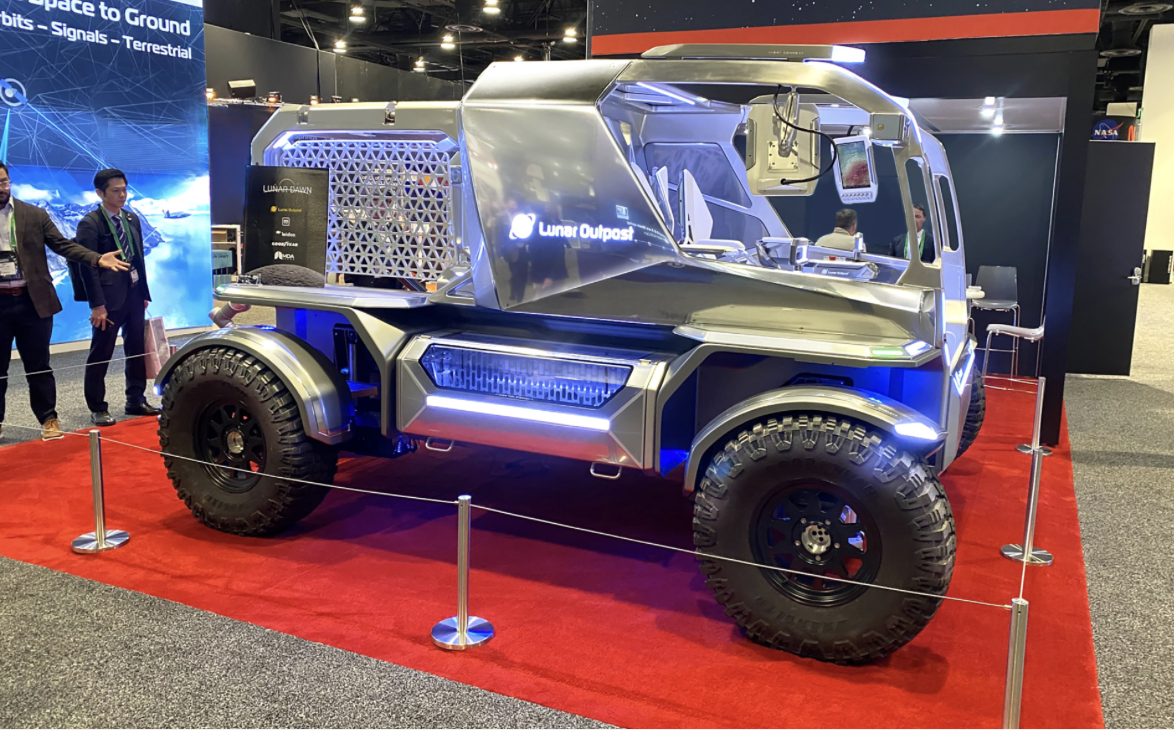
A lunar rover needs radiation measurements for three different reasons.
First, electronics. Surface vehicles will use avionics, cameras, autonomy stacks, radios, battery systems, power converters, navigation sensors, and payload interfaces. Solar energetic particles and high-energy charged particles can produce single-event effects, noise, resets, degradation, and false readings. A rover operating near the South Pole, especially during low Sun angles and long shadow transitions, cannot treat radiation as only a design margin.
Second, crew operations. A crewed LTV needs local radiation awareness for EVA timing, traverse planning, shelter decisions, and asset-level warnings. The relevant question is not only what the Sun is doing globally. The operational question is whether this rover, this route, this EVA window, and this habitat-adjacent activity remain inside acceptable exposure and system-risk thresholds.
Third, science and anomaly attribution. If a rover camera glitches, a payload resets, a navigation unit loses state, or a drilling system reports inconsistent telemetry, local radiation measurements help separate software faults from environment-driven events.
The instrument requirement is a compact charged-particle and radiation monitor measuring electrons, protons, alpha particles, and high-energy particle flux with time resolution suitable for operations. For surface systems, this should be integrated with position, orientation, local time, rover activity mode, payload state, and fault logs. The useful product is not only raw counts but also a time-stamped radiation context layer tied to actual rover operations.
We at Mission Space, have a small radiation set: a silicon charged-particle spectrometer plus a Cherenkov high-energy detector. It detects particles and correlates particle flux changes with rover mode: driving, charging, drilling, payload deployment, standby, EVA support, and safe-mode events.
Lunar dust is a mechanical and electrical problem at the same time. NASA’s Moon dust material notes emphasize that rovers must account for dust effects during surface operations. A 2023 review in Acta Astronautica describes lunar dust as a threat to surface operations because it contributes to overheating, abrasion, clogging, and health risks.
For rovers, the practical issue is not only natural dust lofting. Wheels, landings, launches, drills, robotic arms, anchoring systems, excavation, and payload deployment can all move dust. A rover can contaminate its own radiators, lenses, seals, connectors, solar arrays, instruments, and navigation sensors. It can also contaminate nearby assets.
A rover therefore needs a dust monitor that measures:
• particle flux near the chassis, wheels, and sensitive payloads;
• particle size distribution and dust charge state;
• changes during wheel motion, braking, turning, and slope traversal;
• dust response during local sunrise, sunset, and shadow transitions.
NASA and LASP’s DUSTER payload gives a useful reference point for what this class of measurement looks like. DUSTER includes an Electrostatic Dust Analyzer to measure charge, velocity, size, and flux of lofted dust, and RESOLVE to characterize electron density above the lunar surface using plasma sounding.
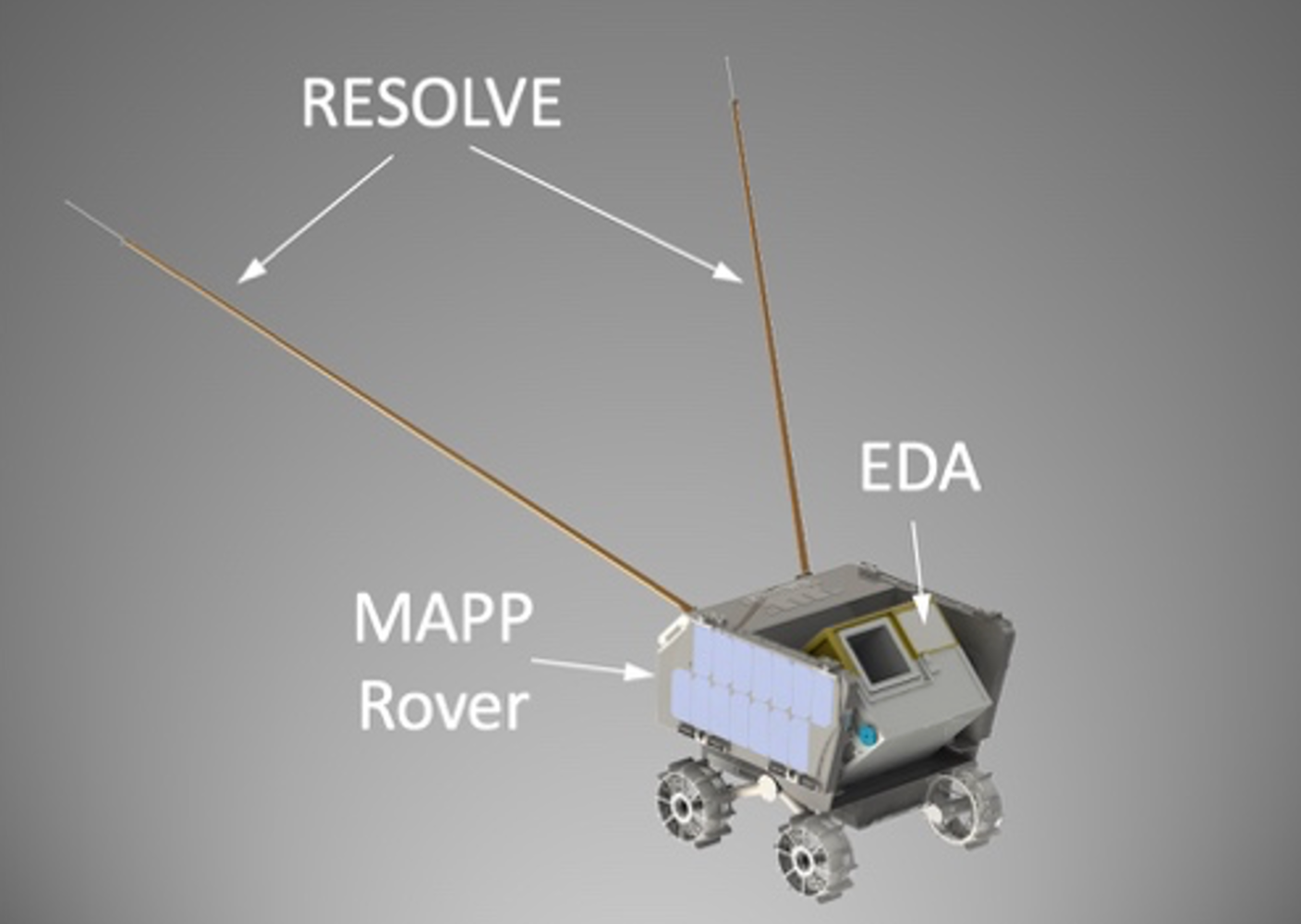
For rover operations, a compact dust and charging unit should not sit only as a science payload. It should feed rover health management. For example: if dust flux rises during a wheel maneuver, the rover can reduce speed, adjust steering, avoid aggressive turns, delay deployment of exposed optics, or park with radiators and panels in a lower-risk orientation.
Surface charging is one of the least visible rover risks because it does not look like a mechanical hazard until it creates one. On the Moon, charging can be driven by solar UV, solar wind plasma, shadow boundaries, energetic particles, and local structures. The South Pole makes this more complicated because rovers move across sharp illumination gradients, shadowed terrain, cold traps, slopes, crater rims, and assets with different material properties.
A rover can accumulate charge. Its wheels, chassis, panels, booms, tools, and payload surfaces can sit at different potentials. Nearby dust grains can charge differently from the vehicle. Surface potential changes can influence dust adhesion, sensor noise, electrostatic discharge risk, and payload contamination.
The instrument requirement is a surface charging unit that measures local electric field conditions and charge accumulation near the vehicle. For a rover, the most useful configuration is not a single static sensor. It is a distributed package: one unit near the chassis, one near exposed payloads or radiators, and one placed on a small boom or deployable reference point. This allows the rover to distinguish vehicle-generated charging from ambient surface conditions.
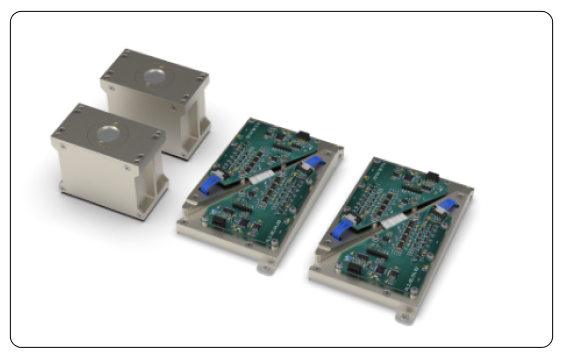
The data should be tied to rover state. A surface-charge spike during a shadow crossing has a different operational meaning from a spike during drilling, wheel slip, dust plume exposure, or solar array deployment.
The lunar surface sits directly in the space plasma environment. A rover operating at the surface is exposed to solar wind interaction, wake-region effects, local photoelectron populations, and plasma changes caused by terrain and illumination. Plasma conditions influence surface charging, dust charging, and instrument behavior.
The instrument requirement is a compact plasma/electron-density monitor or sounding capability. DUSTER’s RESOLVE instrument is one example of why electron-density measurement is being tied directly to dust and charging studies near the surface.
For rover use, plasma data should be part of the environment model rather than a standalone science stream. If dust adhesion increases, charging changes, and local electron density shifts together, operators get a more useful diagnosis than any one sensor can provide alone.
Rovers will carry motors, batteries, power electronics, radios, payloads, and possibly ISRU or drilling hardware. These systems produce electromagnetic signatures. The Moon also has localized crustal magnetic anomalies. For surface science and vehicle health, it is useful to separate local vehicle noise from ambient electromagnetic conditions.
The instrument requirement is a compact magnetometer, ideally with a configuration that allows compensation for rover-generated fields. It should be synchronized with power-system telemetry, motor activity, payload operations, and communications events.
For a rover carrying sensitive instruments, this becomes an operational diagnostic tool. If a payload sees noise during a traverse, the team can distinguish a plasma/electromagnetic environment change from a rover power-cycle artifact.
Rovers near the South Pole will operate in low solar incidence, long shadows, and terrain with sharp thermal gradients. Permanently shadowed regions and crater rims create extreme transitions. Thermal state affects batteries, lubricants, electronics, mechanisms, sensors, and surface contact materials.
The instrument requirement is temperature sensors inside the rover plus a local surface-environment package: surface temperature, sky-facing radiometry where relevant, illumination state, shadow transition timing, and local terrain context.
This data matters for route planning. A rover may be technically capable of driving through a region, but the combined thermal, power, dust, and communication profile may make the route operationally expensive.
Small robotic rovers can be treated as mission experiments. LTV-class systems are different. They are infrastructure. They must support surface logistics, payload deployment, crew mobility, teleoperation, and repeat use.
Local environment data must move into the rover’s decision loop.
A rover should be able to answer:
Is this route safe for electronics during current radiation conditions? Will this slope or wheel motion create dust risk for the payload deck? Are we entering a charging regime that could affect sensors or dust adhesion? Should we delay deployment until after a shadow transition? Did this anomaly come from software, radiation, charging, thermal stress, or dust contamination? Can nearby assets operate while the rover drives past them?
Without local measurements, operators infer these answers from models, orbital data, lander telemetry, and conservative margins. That works for short demonstrations. It becomes limiting for a surface economy with repeated missions.
A practical rover environment package would include:
Rover teams need operational interpretation. A good rover-environment product would produce examples like:
Dust alert: wheel slip and dust flux increased during a turn on regolith slope; reduce speed and avoid exposed payload deployment for the next drive segment.
Charging alert: surface potential changed during shadow transition; delay sample-handling operation and keep sensitive instruments covered.
Radiation alert: high-energy particle counts rising; switch nonessential electronics to protected mode and reassess EVA window.
Payload contamination warning: local dust flux increased after nearby lander activity; delay optical calibration.
Anomaly attribution: rover reset coincided with particle flux increase and no corresponding thermal or power transient; classify as probable radiation-driven event.
This is where lunar surface operations start to look less like isolated lander missions and more like an industrial environment: vehicles, landers, payloads, power systems, communications relays, habitats, drills, and scientific instruments operating near each other.
At Mission Space, we are building hardware for in-situ measurements and software that provides mission-specific warnings.